Reading a label, ingredient by ingredient
Ingredients in men's vitamins and herbal formulas
What each common component does in a daily routine, how extracts and minerals are listed, and how to compare two panels side by side without guessing.
How to use this page
A reading aid for labels, not a medical reference
This page explains the ingredients you'll find most often in men's vitamin and herbal formulas sold in Indonesia, and what role each one plays in a daily routine. We describe ingredients by family and form, using the terms you'll see on packaging from retailers such as Guardian Indonesia and Natural Farm.
If a label term still isn't clear after this page, write to us at Contact and we'll add it to the list.
Vitamins in a daily formula
Minerals and trace elements
Herbs common in Indonesia
Formats and how to read a panel
How B12 is listed
Both are valid. The form matters mainly when you compare two products side by side.
First family on the panel
Vitamins in men's daily formulas
B vitamins are the backbone of most daily men's formulas. You'll see B1, B2, B6 and B12 listed individually or as a B-complex, and they appear in products ranging from a basic daily multivitamin to a stamina-focused capsule. Vitamin C and vitamin D show up frequently as well, sometimes at higher amounts in age-targeted products.
The label distinguishes between forms. A letter and a number tell you which vitamin it is; the word in parentheses tells you which form the manufacturer chose. When you compare vitamins and minerals for men across two bottles, read the form before you read the marketing line above it.
Minerals and trace elements
Zinc is the mineral most associated with men's formulas, and it's usually listed with a form name such as zinc gluconate or zinc citrate.
Magnesium, selenium and iron appear less consistently, partly because needs vary and partly because some formulas deliberately omit iron. When you read a facts panel, check the mineral form and the amount per serving.
A product that lists three minerals at meaningful amounts is doing more than one that lists ten at trace levels. Compare amount per serving, not the length of the list.
Form names to expect
Zinc gluconate, zinc citrate, magnesium oxide, magnesium citrate, selenium as selenomethionine.
Amounts worth weighing
Read what is listed per serving, then compare that single column across two products.
Local botanicals
Herbal ingredients common in Indonesia
Local formulas draw on a small set of regional botanicals. Pasak bumi is the most visible, and it's the headline ingredient in Neo Hormoviton Pasak Bumi alongside ginseng extract and L-arginine. Ginseng appears widely, both in local capsules and imported blends. Maca is common in vitality-oriented products. Saw palmetto anchors imported botanical formulas such as GNC Men's Ultra Saw Palmetto Formula, sold in tablet format in the Indonesian assortment.
Each herb is typically listed as an extract with a ratio or a standardized percentage — the two terms covered further down this page.

Two terms that cause the most confusion
Extract ratios and standardization
An extract ratio tells you how much raw plant material went into a given amount of extract. A 10:1 listing means ten parts dried herb to one part extract. Standardization is different: it states that a fixed percentage of a marker compound is present in each batch.
Extract ratio
Ten parts dried herb to one part extract. It tells you the concentration of raw plant material, and nothing about effectiveness.
Standardization
A fixed percentage of a marker compound per batch. Saw palmetto formulas often standardize on fatty acids; ginseng extracts on ginsenosides.
Neither term means the product will do more. They mean the manufacturer commits to a consistent input from bottle to bottle, which is what makes comparison possible at all. For a formula you plan to take daily, that consistency is the part worth paying attention to.
Where the material starts
Whole-food and plant-based sources
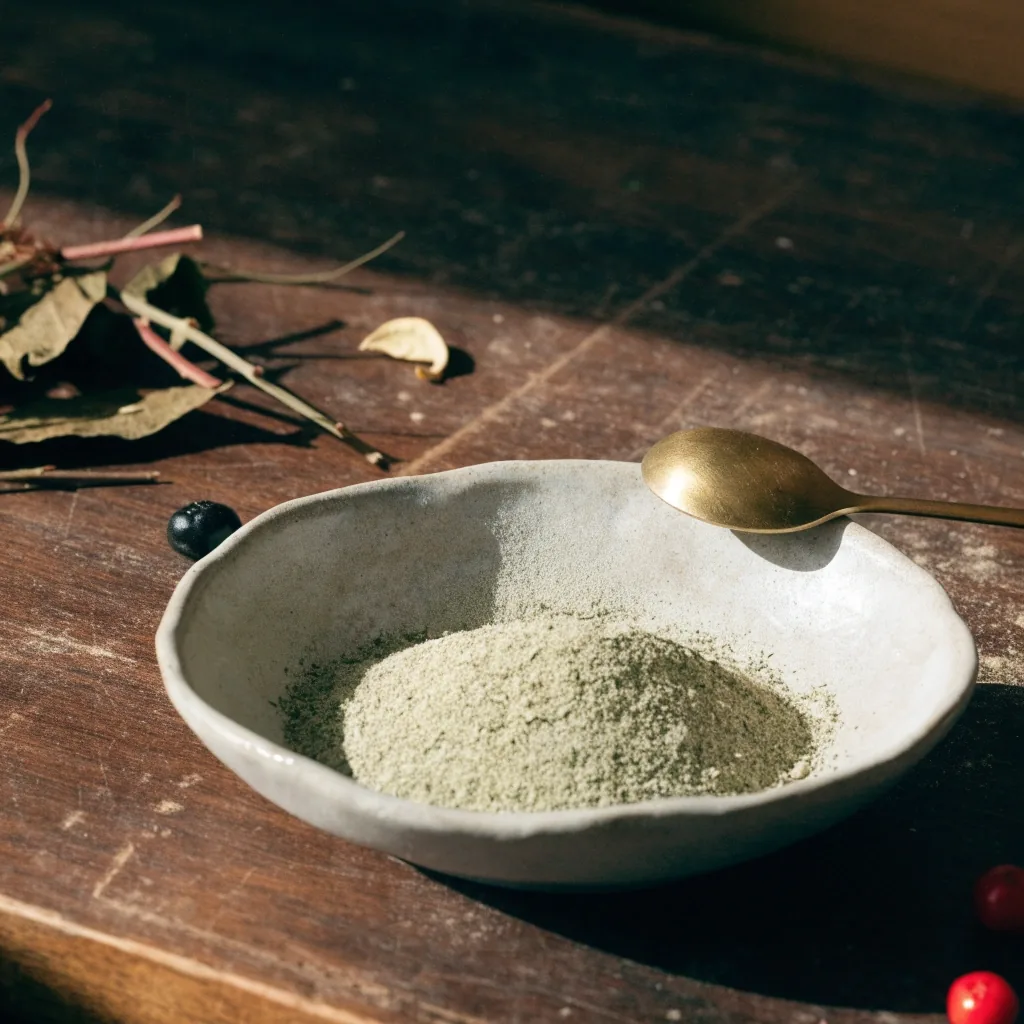
Whole-food multis use vitamins and minerals derived from food sources, such as a blend of fruit and vegetable concentrates, instead of isolated compounds. Plant-based formulas extend that idea to the capsule shell and carrier ingredients.
These products usually list a food blend alongside the standard vitamin names, and the amounts per serving are often lower than in conventional multis. That's a formulation choice, not a defect.
If you prefer food-first
Look for the blend on the panel, usually named as a fruit or vegetable concentrate.
If you want higher amounts
A conventional multivitamin will usually state per-serving numbers more clearly.

Listed in milligrams, like everything else
Amino acids and supporting compounds
Some men's formulas add amino acids and related compounds. L-arginine is the one you'll see most often, and it appears in Neo Hormoviton Pasak Bumi as part of the formula. Taurine, carnitine and similar compounds also show up in energy-oriented products.
Named on its own line
The amount per serving is transparent, which makes two products comparable.
Hidden inside a blend
The ingredient is listed, but its individual amount is not. Comparison gets harder.
What to check first
Whether the line stands alone or sits inside a blend. Alone is clearer.
Format is not potency
Capsules, softgels, tablets and what they contain
The format affects what else is in the product besides the active ingredients. None of these formats makes an ingredient more effective on its own, but they do change how you take the product and how it stores.
That's worth knowing when you compare a capsule against a softgel with a similar panel.
Capsules
Powder or extract plus a small amount of flow agent. The most common format for botanical blends.
Softgels
Carry oil-based ingredients and appear in premium lines such as Natural Factors Prostcare, a 60-softgel product.
Tablets
Include binders and coatings to hold their shape. Saw palmetto formulas in the Indonesian assortment often arrive this way.
Powders
Mix into liquid. Easier to adjust the serving, but the panel often lists a scoop rather than a fixed unit.
Reading a facts panel in order
The supplement facts panel is the only part of the label written to a regulatory standard, so it's the part worth reading closely. Front-panel claims are written for appeal, not accuracy.
Five passes down the panel. About a minute per bottle once you know the sequence.
-
1
Serving size
Start at the top. Everything below is expressed per serving, not per capsule.
-
2
Amount per serving
Read each ingredient line and its figure before you look at anything else on the label.
-
3
Form or extract ratio
Look for the parentheses. That's where the form name or the ratio sits.
-
4
Other ingredients
Scan this line for fillers and carriers. It sits below the active ingredients by design.
-
5
Expiration notation
Tells you how the retailer rotates stock. Worth a glance before you commit to a bottle.
Words without numbers behind them
Terms that don't mean what they suggest
When a term has no measurable meaning, ignore it and read the numbers instead.
"Natural"
Means the ingredient has a plant, mineral or animal origin. It says nothing about the amount, the form or the quality control behind it.
"Herbal"
Means the formula contains plant material. It does not mean the formula is gentler or safer than anything else on the shelf.
"For men"
A marketing category. Products across it range from a basic 30-capsule multivitamin to a specialized botanical blend.
Questions visitors ask most about ingredients
Three short answers that come up whenever someone writes in about a panel they can't read.
What should a daily men's vitamin contain for general wellness?
Most daily formulas include a B-complex, vitamin C, vitamin D and zinc, with additional minerals depending on the brand. There's no single correct panel. Look for meaningful amounts per serving and a form name you can identify, then match the product to your routine rather than to a checklist.
Are plant-based or whole-food multis better than standard multivitamins?
Neither is universally better. Whole-food multis use food-derived sources and often list lower per-serving amounts. Standard multis use isolated compounds at stated amounts. Choose based on whether you prefer a food-first formulation or clearer per-serving numbers.
What does an extract ratio actually tell me?
It tells you the concentration of raw plant material in the extract, such as 10:1. It doesn't indicate effectiveness. Standardization percentages, which state a fixed marker compound level, are the term to look for if you want batch-to-batch consistency.
Still reading a label you can't decode? The Product Guide compares formats side by side.
Browse the Product GuideWhere to go once the panel makes sense
Two next steps, depending on what you're weighing up: formats and products side by side, or how the amounts shift with age.
[email protected] · +62 271 740 553
Jl. Slamet Riyadi No. 350, Laweyan, Surakarta, 57147 · Monday to Friday, 09:00–18:00